
OVERVIEW OF LEADERSHIP
Historically, the idea of leadership was introduced by Warren Bennis in his early 90s. He wrote 30 books on it. He defined leadership as a skill that can be gained by handwork (Sterbenz 2014). There are two types of leadership style, Early styles known as Traditional leadership and modern leadership known as Contemporary Leadership. The early ideas of leadership were invented of industry expansions and revolution that described leader as a great individual. Early theories of leaderships known as Traditional Leadership styles, include the great man 7 traits theory (Hunt, Thaddeus & Fedynich, Lavonne 2019).
Trait theory(1930s): In this theory, Effective leaders are born not made, we have great examples like Nelson Mandela and Gandhi. Leadership qualities are always recognised through personal abilities, characteristics and the 7 leadership traits.
Kurt Lewin in 1930 invented three types of leaders; Autocratic, Democratic and Laissez faire leadership styles (Carlin 2019).
Autocratic Leadership
In autocratic style of leadership, every decision is made by the upper level management without consulting their team members. It is known as a boss centered leadership with power distance between the leaders and the employees (Degree 2018).
Democratic Leadership
In democratic style, decision making process includes team members. They believe in creativity and innovation and it encourages employees towards better performance. It is also known as team centered leadership (Degree 2018).
Laissez-Faire Leadership
In this leadership style, employees are given full freedom to work in their own style and provide them with resources. It creates high job satisfaction, but sometimes time management problem occurs because of this style. It is also known as Hands-off leadership, let the people do as they choose (Degree 2018).
DEFINITION OF LEADERSHIP
Leadership is a process of social influence, an art of motivation and encouraging people towards a certain goal (Ward 2020). Leadership is the ability to transform vision into reality, whereas a good leader is someone who has followers (Kruse 2013).
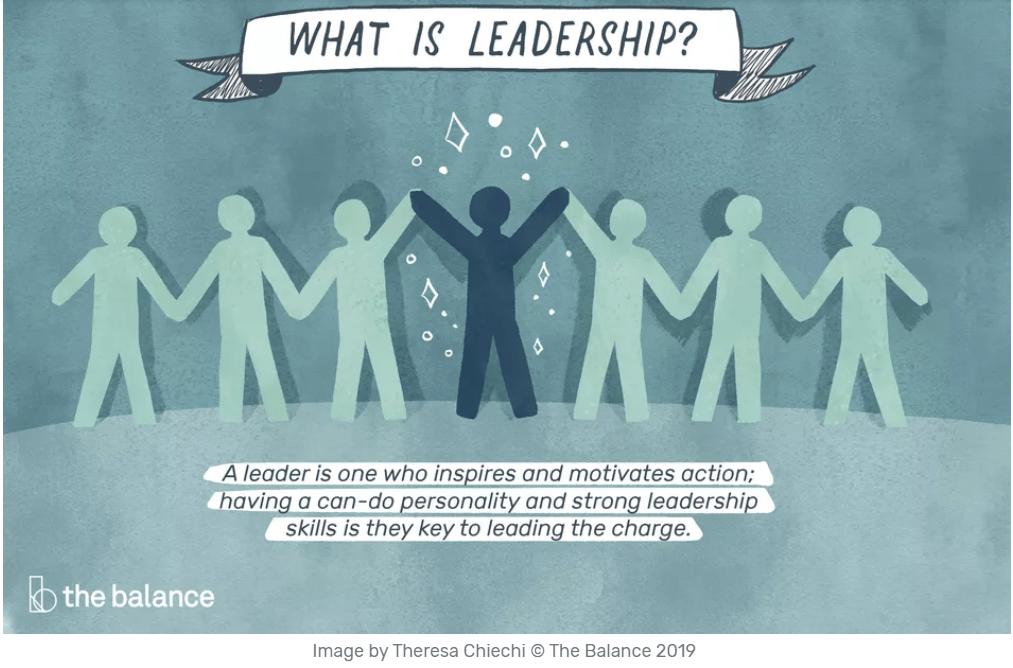
The most important features of leadership come from these essential leadership theories which includes the following;
Traits Theory
A good leader has followers and leaders inspire them. To be a good leader, an individual need to have 7 traits associated with leadership (Economy n.d.)
- Drive: A leader need to put a lot of efforts to achieve high goals and be more ambitious towards the aim.
- Desire to Lead: They should have the ability and capacity to lead and take responsibility to influence others to achieve the target.
- Honesty and Integrity: They must create a healthy environment and connection with their followers, workers, and be more honest with them to show them the right path and consistency to work hard.
- Self Confidence: A good leader needs to be confident about the target and lead other with self-confidence.
- Intelligence: Leaders need to have plenty of knowledge about situation to solve problems and to create a vision for the followers
- Job Relevant Knowledge: Leaders should have full information about the company and its matters, so it helps the leader in making favourable decision for the company
- Extraversion: it is related to optimism that leader should have a positive attitude and be more social and active.
Situation Theory
Situational leadership theory reflects that no leadership style is the best. It all depends on the circumstances of an organisation and the most effective leaders are the one who adapts the style of leadership according to the requirement of the situation (Cherry 2019).
Visionary Theory
In visionary leadership, leaders work according to the requirement of the world that how the world should exist. (Lucas 2019).
Charismatic Leadership (1970-1980’s)
Charismatic leaders have an ability to persuade and inspire the followers. They even sacrifice their own comfort to achieve a certain aim. They are focused, creative and confidence (Sisk 2018).
For this blog, I would like to talk about the leadership styles that are now used in the modern world. Modern leadership is known as Contemporary leadership. Contemporary leadership has two types; Transformational and Transactional leadership.

Transformational leadership:
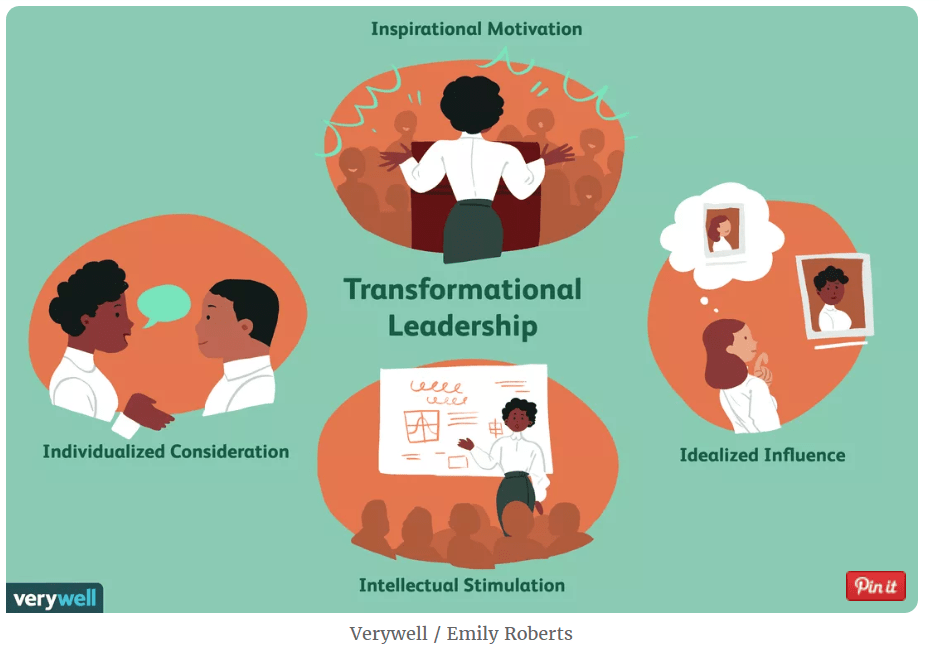
Transformational leadership was introduced by James MacGregor Burns, he said that transformational leadership is all about taking each other to the upper level of ethical and inspiration. Transformational leadership includes motivating people and spreading positivity in the working environment. Leaders who follow transformational leadership are more optimistic and energetic and ambitious towards their work (Cherry 2020). In transformational leadership, leaders are innovative, creative and enthusiastic and they can bring change with a sense of promise and motivation. Study indicates that groups led by transformational leaders have higher levels of performance and satisfaction than groups led by other types of leaders(Cherry 2020).
Transformational can be further categorise into four concepts (Cherry 2020).
- Idealised influence
- Inspirational motivation
- Intellectual stimulation
- Individualised consideration
Transactional leadership
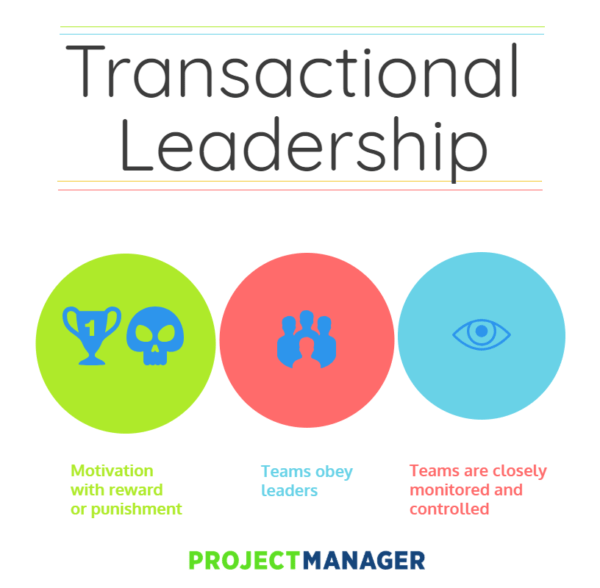
Weber described transactional leadership as the exercise of control on the basis of information. In transactional leadership, leaders are more practical (St. Thomas University 2018). They are more focused on results, have formal authority and positions of responsibility in a company. Transactional leaders recognise the demand of the followers and gives reward to encourage them to increase their efforts and performance towards the certain goal (Cherry 2019).
Transactional leadership has following characteristic
- Attentive towards short term goals
- Conflicting to change
- Favour current policies and methodologies
- Incline to be more inflexible
- More focused on following rules and doing everything efficiently
DIFFERENCE BETWEEN TRANSFORMATIONAL AND TRANSACTIONAL LEADERSHIP
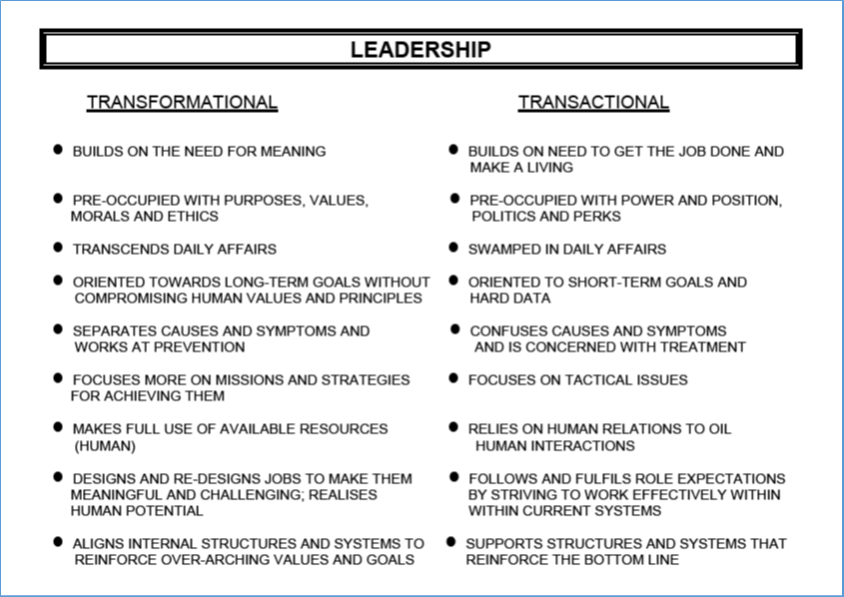
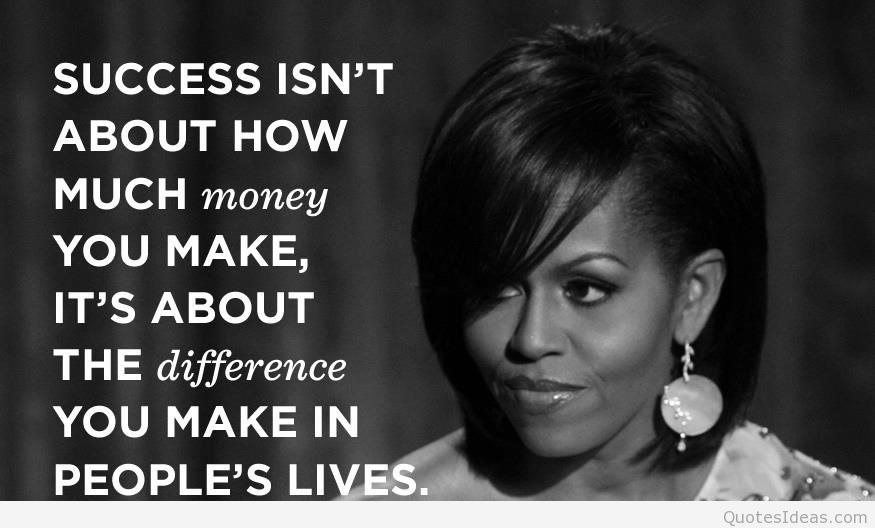
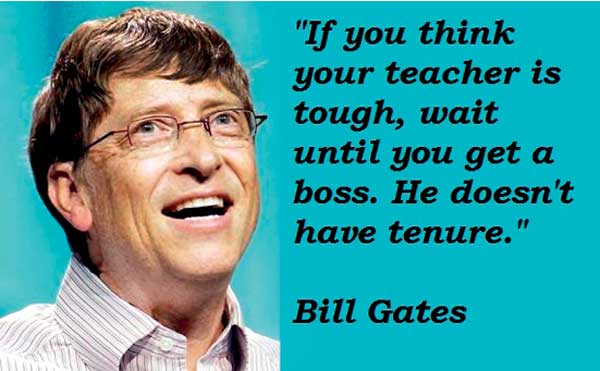
For Transformational leadership I’ll take an example of Michelle Obama, a lawyer and who was the first lady of US from 2009 to 2017. A recent article in Forbes stated that Michelle Obama has been actively in the news for her fashion sense and her leadership skills and community activism. A female Transformational leader who inspired others, motivated people and enhanced the morale of the followers. Michelle Obama established this quality as she leads the change from fast food to healthy eating for everyone, but especially the children. She also led a countrywide move from inactive to physical activities for children to contribute in the effort to end childhood obesity (Agbor 2017). For Transactional leadership, we can take an example of Bill gates, a well-known computer tycoon of Microsoft. He is known for an influential and strict leadership style he transformed Microsoft into a stable monopoly. He had strict rules and regulations to control the organisation’s operations for the development and acceptance of the products by consumers. He was more focused on sales. As a Transactional leader, he used to control his new product and ask relevant and hard questions until he was fully satisfied from the output by his employees (Rampton 2016).
CONCLUSION AND RECOMMENDATION
So, if we conclude the contemporary leadership, Michelle Obama was more focused towards humanity and did work for the betterment of the nation and always influenced her followers, that is why she is known as a Transformational Leader. But Bill gates always focused on increasing the profits of the company and never motivated his workers for better performance, so he comes in the category of Transactional leadership. Now a days, people prefer working in an organisation with Transformational leaders to enhance their skills and positive environment.
REFERENCES
Agbor, S. 2017 Michelle Obama – Transformational Leader [online] available from https://contentbuilder.merlot.org/toolkit/html/snapshot.php?id=51988240193565 [17th march 2020]
Carlin, D. 2019 Democratic, Authoritarian, Laissez-Faire: What Type of Leader Are You? [online] available from https://www.forbes.com/sites/davidcarlin/2019/10/18/democratic-authoritarian-laissez-faire-what-type-of-leader-are-you/#2afacba72a6b [14th march 2020]
Cherry, K 2019 The Situational Theory of Leadership [online] available from https://www.verywellmind.com/what-is-the-situational-theory-of-leadership-2795321 [16th march 2020]
Cherry, K 2019 How a Transactional Leadership Style Works [online] available from https://www.verywellmind.com/what-is-transactional-leadership-2795317 [14th march 2020]
Cherry, K. 2020 Transformational Leadership [online] available from https://www.verywellmind.com/what-is-transformational-leadership-2795313 [ 14th march 2020]
Degree, M. (2018) Leadership Styles Autocratic, Democratic, and Laissez-Faire [online] available from https://thirddegreesolutions.com/leadership-styles-autocratic-democratic-and-laissez-faire/ [14th march 2020]
Economy, P. N.d. 7 Traits of Highly Effective Leaders [online] available from https://www.inc.com/peter-economy/7-traits-highly-effective-leaders.html [ 14th march 2020]
Kruse, K. 2013 What Is Leadership? [online] available from https://www.forbes.com/sites/kevinkruse/2013/04/09/what-is-leadership/#2bb81cd65b90 [ 14th march 2020]
Lucas, S. 2019 Visionary Leadership [online] available from https://www.thebalancecareers.com/visionary-leadership-4174279 [14th march 2020]
Rampton, J. 2016 How Bill Gates Became a Leadership Legend [online] available from https://www.entrepreneur.com/article/250607 [16th march 2020]
Sisk, A. 2018 Charismatic Leadership Theories [online] available from https://bizfluent.com/about-7416354-charismatic-leadership-theories.html [16th march 2020]
St. Thomas University. 2018 What is Transactional Leadership? How Structure Leads to Results [online] available from https://online.stu.edu/articles/education/what-is-transactional-leadership.aspx [14th march 2020]
Sterbenz, C. 2014 The Man Who Invented The Study Of Corporate Leadership, Warren Bennis, Died on July 31st Aged 89 [online] available from https://www.businessinsider.com/the-man-who-invented-the-study-of-corporate-leadership-warren-bennis-died-on-july-31st-aged-89-2014-8?r=US&IR=T [14th march 2020]
Ward, S. 2020 The Definition of Leadership What Is Leadership? And Can You Learn to Be a Good Leader? [online] available from https://www.thebalancesmb.com/leadership-definition-2948275 [ 14th march 2020]
Hunt, Thaddeus & Fedynich, Lavonne. (2019). Leadership: Past, Present, and Future: An Evolution of an Idea. 8. 20-24. available from https://www.researchgate.net/publication/331473953_Leadership_Past_Present_and_Future_An_Evolution_of_an_Idea [14th march 2020]
 Ayesha's Blog
Very helpful 👏🏼
LikeLiked by 1 person
Thank you Aneeqa 🙂
LikeLiked by 1 person
A good motivator is important to achieve a goal and it is important to remember that different people are motivated by different things.
LikeLiked by 1 person
Wow what a beautiful thought, you are so right. People need to understand this to be more successful in every phase of life. Thank you for your feedback 🙂
LikeLiked by 1 person
Explained the whole thing very precisely, Thanks a lot😊 we need more transformational leaders
LikeLiked by 1 person
Yes I totally agree with your point that we need more Transformational leaders now a days, Thank you for your feedback 🙂
LikeLiked by 1 person
Brilliantly written and very well explained between the two visionary and influential leaderships. It as great experience to know about my favourite Michelle Obama.
LikeLiked by 1 person
Michelle Obama is my favourite as well because of her warm nature, I;m glad you liked it. Thank you for your feedback 🙂
LikeLiked by 1 person
I really like the way you have designed your blog, Michelle Obama was no doubt a great leader and we need more transformational leaders in the world to create a positive environment.
LikeLiked by 1 person
Yes, because positive environment is the most important thing considered now a days. Thank you for your feedback 🙂
LikeLiked by 1 person
Hey Ayesha, Your blog is very nice, I was searching for information about transformational Leadership and I found it all in your blog. Michelle obama was an amazing leader and we need more like her. Thank you for sharing your knowledge with us.
LikeLiked by 1 person
I am so happy that It helped you and I completely agree with your point on Michelle Obama. Thank you for your feedback 🙂
LikeLiked by 1 person
Bills gates had strict rules and also had the ability to become successful, but Michelle obama had humanity in her leadership which was more impressive. Your blog is very informative and attractive. Well done👏
LikeLiked by 1 person
Yes, because Humanity attract people more and it should be adopted by everyone. Thank you for your feedback 🙂
LikeLiked by 1 person
I really like charismatic leadership style because it helps to motivate people and inspire them, because leaders should inspire their followers. Amazing blog, truly knowledgeable. 👍
LikeLiked by 1 person
I’m glad that you liked my Blog and yes Charismatic leadership is very effective. Thank you for your feedback 🙂
LikeLiked by 1 person